Political secrets and scandals conceal
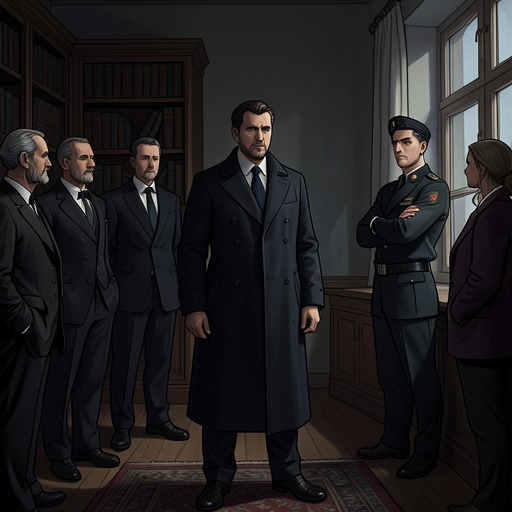
The Secret of ChimneysPolitical secrecy and scandal concealment are not incidental to the restoration scheme in Herzoslovakia: they are among the means by which its supporters try to make the scheme possible. George Lomax fears that Count Stylptitch’s memoirs will expose the old dynasty’s misconduct and a still-unresolved disappearance at Chimneys, jeopardizing British backing for Prince Michael and a million-pound loan tied to concessions. The effort to contain those revelations extends from discreet editing and private persuasion to the handling of a death at Chimneys; meanwhile, the story’s largest concealed fact is Anthony Cade’s identity as Prince Nicholas, whose supposed death had been deliberately reported rather than suffered.
Memoirs and the restoration scheme
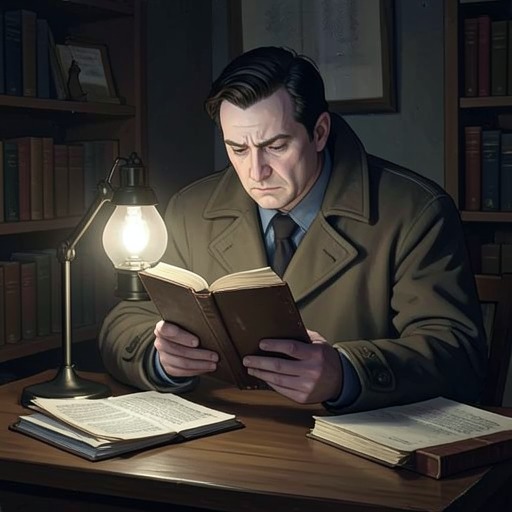
The immediate political concern is Count Stylptitch’s memoirs. Lomax calls them an unfortunate contretemps, but the danger is not simply that readers might enjoy scandal. In his view, publication could disrupt a current diplomatic and financial arrangement: Herzoslovakians want to restore the monarchy and offer the crown to Prince Michael, who has the support of the British Government. In return, Michael is prepared to grant concessions to Isaacstein and Co. for a loan of about a million pounds to establish him on the throne.
Lomax fears that the memoirs could make this plan publicly indefensible. They may recount the tyranny and misconduct of the Obolovitch family, prompting questions in Parliament about why a supposedly broad-minded republic should be replaced by an obsolete tyranny. The political argument could then turn against the Government, with the restoration represented as a policy dictated by financiers seeking profit. Lord Caterham makes this possible chain of consequences explicit, while Lomax’s urgent appeal for discretion shows how much the scheme depends on preventing the argument from reaching the public.
The manuscript also threatens to expose a separate secret. Lomax hints at an “unfortunate disappearance” connected with a stay at Chimneys, which Lord Caterham initially cannot identify. The missing object had never been recovered, and the loss was kept from public knowledge. Stylptitch was present and, according to Lomax, knew something about it. Because the Count had previously disagreed with the government over the Turkish question, Lomax worries that he may have recorded the affair out of malice. A personal and diplomatic dispute thus gives the memoirs a second potential force: they could make an old concealed loss into a public scandal with consequences beyond the household where it occurred.
Managing publication and exposure
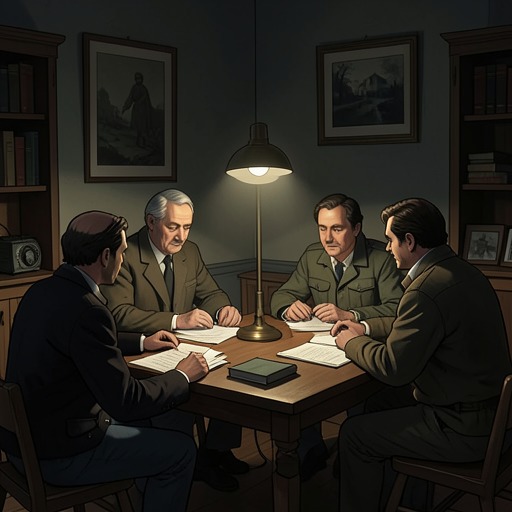
Lomax’s planned response is to approach James McGrath when he arrives in Britain, explain the manuscript’s possible consequences, and ask him to postpone publication for at least a month. He also wants the memoirs judiciously edited. The proposal treats delay and revision as instruments of political containment: rather than answer the disclosures, the government’s allies hope to control when and how they appear.
Lomax is not confident that persuasion will work. He fears McGrath may simply refuse, so he proposes inviting him to Chimneys, where meeting Prince Michael might flatter him and make him easier to handle. The invitation therefore has a political purpose beneath its social form. Lomax hopes to turn personal access and hospitality into leverage over a manuscript that could imperil the restoration negotiations.
The governing ideal of discretion recurs in other crises. After a body is discovered at Chimneys, George insists that the matter must be hushed up, but Lord Caterham points out that a death cannot be concealed indefinitely: the body must be buried and the police are involved. George then insists that Superintendent Battle, rather than the local police, should take charge, relying on the detective’s reputation for discretion and his previous work with the government on a party-funds affair. Later, when speaking privately with Battle, Lomax again says that the matter must not get about. Battle answers that such things always do. The exchange places official secrecy against the practical limits of controlling information.
Succession, identity, and the limits of concealment
The political stakes sharpen after Prince Michael’s murder. When Anthony asks who will inherit the throne, Lomax says that Prince Nicholas is probably next in line; Battle identifies Nicholas as Michael’s first cousin. He adds that there is reason to believe Nicholas had been in the United States, raising money on his expectations. The succession therefore depends not only on public arguments about monarchy and finance but also on the whereabouts and identity of a claimant presumed absent.
That absence proves to be an engineered secret. In the closing revelation, Anthony tells Isaacstein that Nicholas was indeed reported killed in the Congo, but clarifies that he himself spread the report. He had promised Isaacstein a prince and now identifies himself as Nicholas Sergius Alexander Ferdinand Obolovitch, explaining that he adopted the simpler name Anthony Cade when he set out to live another kind of life. The information that had appeared to remove Nicholas from the succession had instead concealed his continued presence. A political falsehood designed as a personal disguise becomes newly consequential when Michael’s death makes Nicholas the next potential claimant.
The book’s pattern of concealment is therefore double-edged. Lomax’s circle treats secrecy as protection for a policy vulnerable to public scrutiny, trying to defer, edit, or hush up information that could damage it. Yet the final disclosure shows that hidden information can also overturn the assumptions on which political arrangements rest. The memoirs threaten to expose the past; Nicholas’s revelation changes what the future of the throne might be. In both cases, control of the story is itself a form of political power, but it is never secure.